In the cleaning industry, operational success depends on coordination. Planning, execution, time tracking, and billing are deeply interconnected, yet many companies still manage them through separate tools or manual processes. Schedules live in spreadsheets, working hours are tracked elsewhere, and invoices are created manually at the end of the month.
This fragmented approach may seem manageable at first, but as operations grow, it quickly becomes a source of inefficiency, errors, and frustration.
Integrated invoicing, where billing lives in the same system as planning and operations, is emerging as a critical foundation for modern cleaning businesses. This article explores why combining invoicing with planning and workforce management is no longer optional, and how it transforms both internal efficiency and client relationships.
The hidden cost of disconnected systems
When invoicing is separated from planning, information has to be transferred manually. This creates friction at every step:
- Hours worked must be double-checked against schedules
- Changes in assignments are not reflected in billing
- Manual data entry increases the risk of errors
- Managers spend hours reconciling discrepancies
What seems like a simple administrative task often becomes a recurring bottleneck that drains time, energy, and profitability.
Why invoicing depends on accurate planning
In cleaning services, invoices are rarely static. They depend on:
- Actual hours worked
- Extra services performed
- Missed or rescheduled shifts
- Contract-specific pricing rules
When planning data is incomplete or disconnected, invoices lose accuracy. Integrated systems ensure that what was planned, what was executed, and what is billed are aligned automatically.
From planned work to billable reality
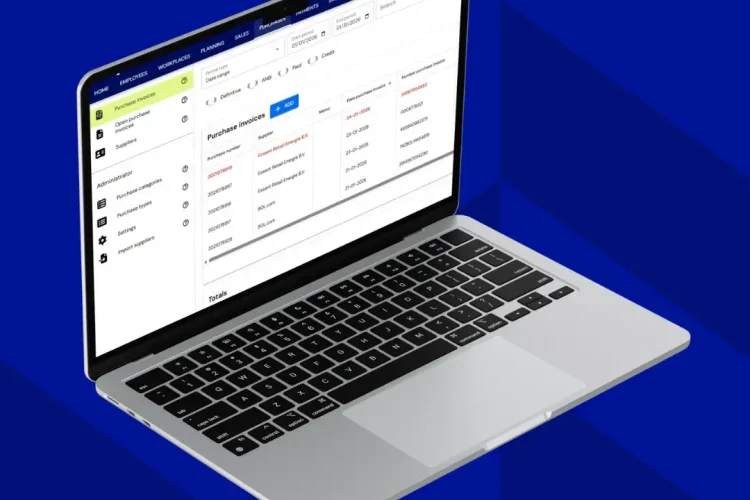
An integrated system creates a direct link between operations and billing. Once a shift is scheduled and completed, the relevant data flows seamlessly into the invoicing process.
This means:
- No re-entering data
- No guessing billable hours
- No manual corrections after client feedback
Invoices become a reflection of real operations, not approximations built weeks later.
Improving transparency and client trust
Clients increasingly expect clarity. They want to understand what they are paying for and why. Integrated invoicing allows companies to provide detailed invoices, link billed hours to specific dates and locations and justify additional charges with operational data
This transparency reduces disputes and positions the cleaning company as professional, reliable, and accountable.
Reducing administrative workload
One of the most immediate benefits of integrated invoicing is time savings. Invoicing becomes a streamlined process, freeing up resources for higher-value activities such as customer service and business development.
Supporting scalable growth
As cleaning companies expand, complexity grows faster than revenue if systems are not aligned. Managing multiple clients, sites, and pricing structures manually becomes unsustainable.
Integrated invoicing supports growth by:
- Standardizing billing processes
- Reducing reliance on individual employees’ knowledge
- Making onboarding easier for new staff
This creates a scalable foundation where growth does not automatically mean chaos.
Better cash flow and financial control
Delayed or incorrect invoices directly impact cash flow. Integrated systems help companies invoice faster and more accurately, improving liquidity and financial planning.
This level of control is especially important in an industry with tight margins.
Minimizing errors
Many billing disputes originate from mismatches between planned and executed work. Integrated systems minimize these conflicts by ensuring consistency across all operational data.
This shifts conversations from blame to facts.
Aligning Operations, Finance, and Management
When planning, execution, and invoicing live in separate systems, departments operate in silos. Integration brings alignment.
Operations teams see the financial impact of scheduling decisions. Finance teams trust the data they receive. Management gains a unified overview of performance, costs, and revenue.
Integrated invoicing is not just a technical upgrade, it is a signal of maturity. It shows that a company takes its processes seriously and values consistency, transparency, and control.
For clients, it means fewer surprises.
For employees, it means clearer expectations.
For managers, it means less stress and better decision-making.
One system, One source of truth
In modern cleaning operations, invoicing cannot be treated as an afterthought. It is the natural outcome of planning and execution.
By bringing invoicing into the same system as scheduling, time tracking, and workforce management, cleaning companies eliminate inefficiencies and build a foundation for sustainable growth.
In a sector where reliability defines success, having one integrated system is no longer a convenience, it is a competitive advantage.