
Running a cleaning business takes more than delivering great service. Behind every completed job, there is scheduling, staff coordination, client communication, time tracking, reporting, invoicing, and problem-solving. When too many of these tasks are handled manually, efficiency drops and valuable time gets lost.
That is why more cleaning companies are turning to digital systems for cleaning companies. Technology helps businesses streamline daily operations, reduce administrative pressure, and give managers better control over what is happening in the field. Instead of working harder to keep up, cleaning companies can work smarter by building processes that are faster, clearer, and easier to manage.
Why efficiency matters in the cleaning industry
Efficiency is not just about saving time. In the cleaning industry, it also affects service quality, team performance, and profitability. A planner who spends hours updating schedules manually has less time to solve issues proactively. A supervisor who relies on phone calls and paperwork has less visibility into what is happening across sites. A business that still uses disconnected systems often creates unnecessary delays, errors, and frustration.
As cleaning companies grow, these inefficiencies multiply. What may seem manageable with a small team becomes difficult to control when there are more employees, more clients, and more locations involved. That is when technology becomes essential.
Digital tools help cleaning companies create structure. They centralize information, support better communication, and reduce the amount of repetitive work that slows the business down.
Strategy 1: Centralize your operations
One of the most effective ways to improve efficiency is to stop working across too many separate tools. When staff information, planning, time tracking, and administration are spread across paper files, spreadsheets, and chat messages, managers waste time looking for information and correcting mistakes.
A central system gives the business one place to manage operations. Employee records, contracts, and team information can be organized through staff management software, making it easier to stay up to date and reduce manual administration. This creates more overview and helps managers act faster when changes happen.
Strategy 2: Digitize planning and scheduling
Planning is one of the most time-sensitive parts of any cleaning business. When schedules are still built manually or shared through printed rosters, updates can be missed and communication becomes slower than it should be.
Using a digital planning system makes scheduling more flexible and more accurate. Managers can update shifts in real time, assign the right people to the right locations, and respond more quickly when availability changes. Employees also benefit because they have clearer visibility into their schedules and tasks.
This reduces confusion, cuts down on repeated questions, and gives planners more time to focus on coordination instead of constant follow-up.
Strategy 3: Improve time tracking accuracy
Manual time registration creates extra work for both office teams and field staff. Paper timesheets can be lost, submitted late, or entered incorrectly. Correcting those errors takes time and can affect payroll, reporting, and client billing.
That is why efficient cleaning businesses are replacing manual processes with time registration and attendance tools. Digital time tracking improves accuracy, reduces paperwork, and makes it easier to monitor hours worked across teams and locations.
The result is a smoother workflow and fewer administrative bottlenecks. Instead of spending time collecting and re-entering data, teams can use that time more productively elsewhere.
Strategy 4: Connect your systems
Efficiency suffers when information has to be entered multiple times in different places. If your scheduling system, payroll process, reporting tools, and administration all operate separately, your team ends up doing duplicate work.
This is where software integrations can make a major difference. Connected systems help cleaning businesses reduce data duplication, improve consistency, and create a smoother flow between operational and financial processes.
Instead of moving information manually from one tool to another, integrated technology helps teams work with fewer interruptions and fewer avoidable mistakes.
Strategy 5: Speed up financial administration
Many cleaning companies focus first on operational efficiency, but financial administration is just as important. Delays in invoicing, unclear reporting, and manual processing all create extra pressure on the back office.
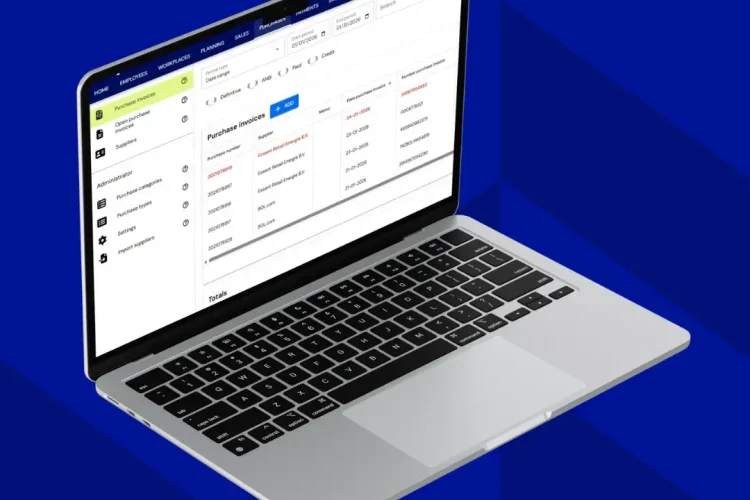
With invoicing and financial dashboarding, businesses can improve visibility into performance and reduce the time spent on repetitive financial tasks. Faster invoicing and clearer reporting do not just save time internally. They also create a more professional experience for clients.
When financial processes are easier to manage, the business becomes more stable and easier to scale.
Smarter systems create stronger businesses
Technology does not replace the human side of a cleaning business. It supports it. By reducing unnecessary manual work, digital tools give managers more time to lead, planners more time to coordinate, and employees more clarity in their day-to-day work.
The most efficient cleaning companies are not simply the ones that work faster. They are the ones that build systems that make smart work possible. They use technology to improve communication, reduce errors, and create more control across the business.
In a competitive market, working smarter is no longer optional. It is how cleaning businesses create efficiency, improve service quality, and prepare for long-term growth. Klien-IT’s homepage specifically positions its platform around “up to 50% less time spent on planning and time tracking” and “all your cleaning processes in one smart system,” which makes these internal links a strong thematic fit for this article.